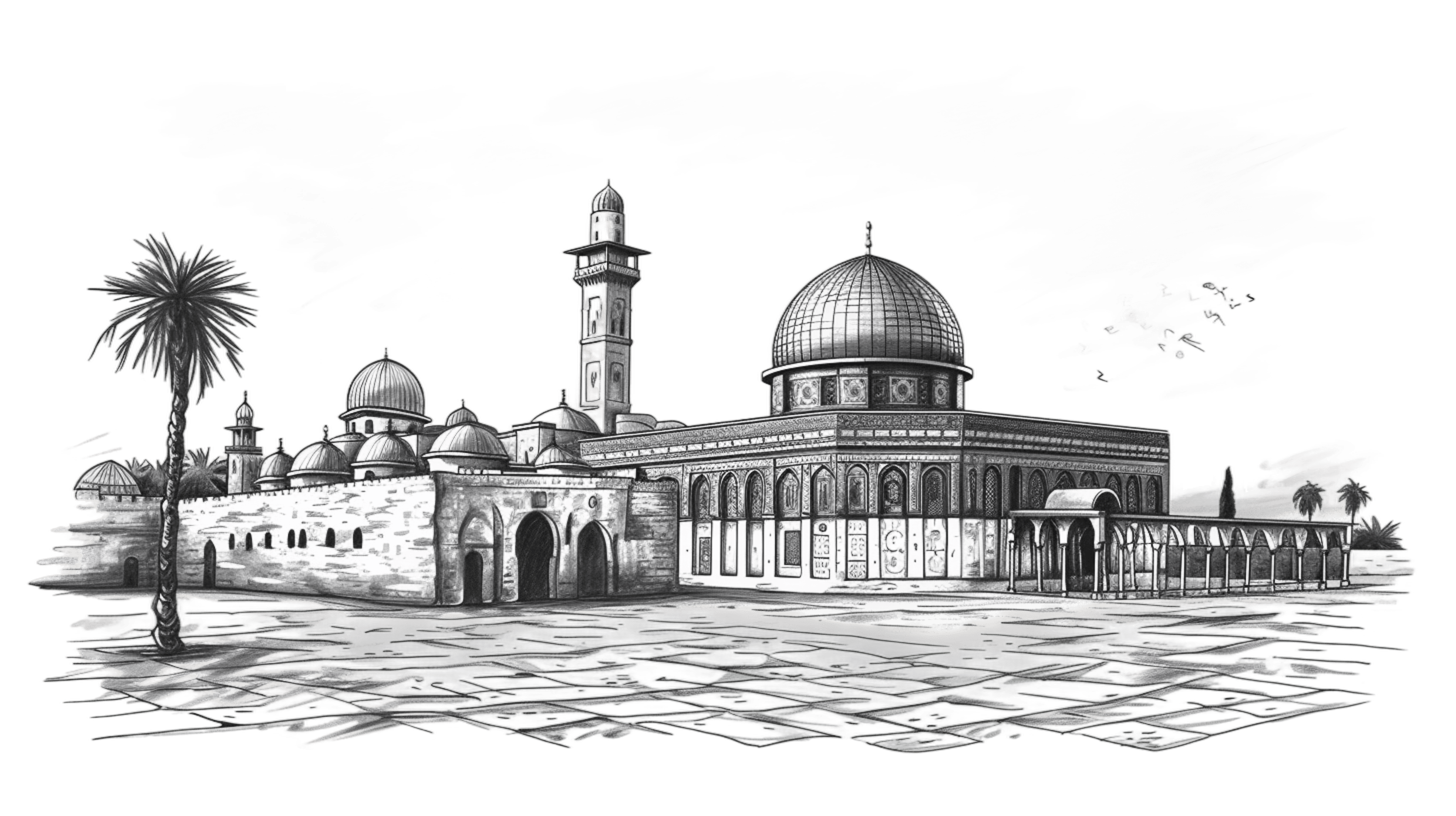
“This pillar examines Jewish victimhood and the Holocaust, stressing the need to recognize historical tragedies while opposing their misuse.”
The Concept of Victimhood in the Zionist Narrative
“While the Holocaust was a tragedy, Palestinians were not responsible for it, and their displacement cannot be justified by crimes committed by Europeans.”
— Counterargument
“Israel portrays itself as the eternal victim to justify its actions, but victimhood cannot be used as a shield for committing crimes against humanity. The killing of 45,000 people, including 70% women and children, cannot be justified under any pretext.”
)
Francesca Albanese
United Nations Special Rapporteur on the Occupied Palestinian Territories
“The fact that you thought October 7th was the biggest single day of slaughter is part of the problem. Palestinian blood is often treated as less valuable than Israeli blood. This false equivalence perpetuates oppression under the guise of victimhood.” “The victimhood narrative is a deliberate strategy to justify apartheid policies while demonizing Palestinian resistance.”
)
George Galloway
British politician, broadcaster, and writer.
“Israel portrays itself as the perpetual victim, but when you remove Hamas from the equation, the oppression of Palestinians continues. In the West Bank, for example, Israel occupies the land, imprisons children without charge, and has killed civilians even before October 7th.” “The narrative of victimhood is used to justify actions against Palestinians. Yet, Palestinians have been living under occupation, facing daily injustices, and their plight is often overlooked.”
)
Mohammed Hijab
an English Islamic scholar, rights activist, author, and influencer, known for his public intellectualism on the philosophy of religion
“This is not a vacuum. The Palestinians in Gaza are rebelling against what amounts to a giant open-air prison created by Israel.”
)
John Mearsheimer
American political scientist and international relations scholar He is R. Wendell Harrison Distinguished Service Professor at the University of Chicago.
The future depends on what you do today.
“Occupation and displacement are the roots of the problem. Israel’s territorial ambitions have never respected historical justice.”
)
Mehdi Hasan
British-American progressive broadcaster and writer, and founder of the media company Zeteo
Innovation distinguishes between a leader and a follower
)
Dan Bilzerian
American professional poker player and businessman
“The real victims are the Palestinians, treated as subhuman for daring to resist occupation.”
)
Bassem Youssef
Egyptian-American comedian and television host
Overview
The first pillar and primary element in the Zionist narrative is the concept of victimhood. This notion posits that Jews are a persecuted people, with the Holocaust serving as the foundational event underpinning this identity. Contemporary Jewish identity is largely centered around the Holocaust, rather than religious texts like the Torah or Talmud. Many Jews do not adhere to Judaism as a faith, yet the Holocaust unites modern Jewish identity. Therefore, when some Muslims attempt to deny or mock the Holocaust to spite Zionists, it is a fundamental error that undermines Muslim efforts in Western decision-making circles aiming to confront the Zionist lobby. The mistake lies not in denying the event but in neutralizing its impact. This can be achieved by decoupling the injustice that occurred from its Zionist exploitation. Acknowledging the injustice is essential, but disputing the numbers involved and highlighting Zionist exploitation of this injustice is crucial. The primary challenge facing the Islamic nation today is to separate these two aspects: recognizing the injustice without justifying Zionist oppression. For instance, the atrocities committed in the Congo, where Belgium killed over six million people, did not lead to the Congolese establishing a narrative of victimhood over other nations. Thus, linking one injustice to another is flawed. Zionists connect the Holocaust to Israel by invoking the slogan 'Never Again,' implying that such atrocities should not recur. They argue that Westerners, who perpetrated this massacre against Jews, must now ensure Jewish security. This guilt complex is exploited to assert that protecting Jews necessitates safeguarding Israel, as it is the sole Jewish state. Consequently, to prevent a recurrence of the massacre, Israel's security must be upheld...
Netanyahu's Shift in Rhetoric
Dr. Naif notes that this argument is losing its efectiveness. People are beginning to realize that there is no direct connection between the Holocaust and Palestinians; the Holocaust was perpetrated by Germans, who are still paying reparations. In response, Netanyahu altered his rhetoric. In a speech, he claimed that Hitler did not initially intend to exterminate Jews but merely to expel them from Germany. According to Netanyahu, it was Amin al-Husseini, the Mufti of Jerusalem, who suggested the extermination of Jews during his time in Germany. These narrative attempts to legitimize the Zionist link between the Holocaust and Palestinians, suggesting that Palestinians were responsible for the Holocaust, thereby justifying actions against them. However, this claim lacks evidence, and even if al-Husseini had infuenced Hitler, it would be his individual responsibility, not that of the Palestinian people. The Vatican absolved contemporary Jews from the accusation of killing Jesus, stating that current generations are not responsible for past actions. Similarly, the German people today are not held accountable for events that occurred 70 years ago. Despite the weaknesses in this argument, it persists as a narrative.
Famous Sayings

“Israel portrays itself as the eternal victim to justify its actions, but victimhood cannot be used as a shield for committing crimes against humanity. The killing of 45,000 people, including 70% women and children, cannot be justified under any pretext.”
Francesca Albanese
United Nations Special Rapporteur on the Occupied Palestinian Territories
Counter arguments
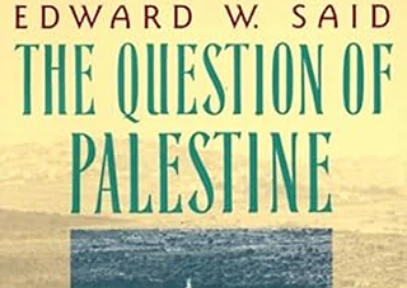)
Edward Said, The Question of Palestine
Explanation: Edward Said critiques the use of Jewish suffering, particularly the Holocaust, as a justification for the establishment of Israel, emphasizing the need to recognize the suffering and rights of Palestinians.
Counter arguments & Articlel
)
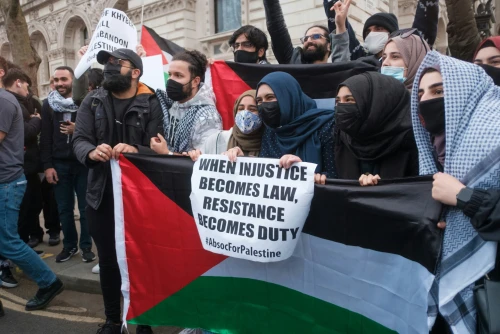
Zionism from the Standpoint of Its Victims
Said examines Zionism through the perspective of those it displaced, highlighting the Palestinian experience and challenging the dominant victimhood narrative.
)
The False Narrative of Settler Colonialism
This article critiques the portrayal of Israel as a settler-colonial state, discussing how such narratives impact perceptions of victimhood and legitimacy.
Read More
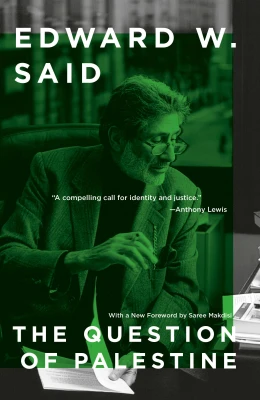)
Edward Said,`he Question of Palestine`
Explanation: Edward Said critiques the use of Jewish suffering, particularly the Holocaust, as a justification for the establishment of Israel, emphasizing the need to recognize the suffering and rights of Palestinians.
)
Human Rights Watch – `A Threshold Crossed`
Human Rights Watch documents human rights abuses against Palestinians, highlighting that the historical victimhood narrative does not justify these ongoing violations.
Link: HRW Report
References
1.
Historical Context of Amin al-Husseini
Wikipedia – Amin al-Husseini This entry provides a comprehensive overview of the Mufti of Jerusalem's life, including his controversial interactions during World War II.
Wikipedia
Comparative Atrocities: The Guardian – Belgium confronts its colonial demons This article discusses Belgium's colonial past in the Congo, where millions were killed, drawing parallels to other historical atrocities.
2.
Vatican's Stance on Jewish Responsibility
The New York Times – Vatican Says Jews Are Not Guilty of Jesus' Death This article reports on the Vatican's declaration absolving contemporary Jews of responsibility for the death of Jesus, emphasizing the importance of not holding current generations accountable for historical events.
3.
Holocaust as a Central Element of Jewish Identity
-Yad Vashem – The Holocaust: Factor in the Birth of Israel? This article discusses the influence of the Holocaust on the establishment of the Jewish state in 1948, highlighting its centrality in contemporary Jewish identity. -Yad Vashem
4.
Netanyahu's Claims Regarding Amin al-Husseini
The Times of Israel – Netanyahu blames Jerusalem mufti for Holocaust, is accused of ‘absolving Hitler’ This article reports on Netanyahu's controversial statement attributing the idea of the Holocaust to the Mufti of Jerusalem, which was widely criticized by historians. The Times of Israel TIME – Hitler and the Grand Mufti: What They Really Said in 1941 This piece examines the historical accuracy of Netanyahu's claims, providing context to the meeting between Hitler and al-Husseini. Time
5.
Exploitation of Guilt for Political Ends
ABC Religion & Ethics – The Holocaust and the State of Israel This article explores how the memory of the Holocaust has been utilized in political narratives to justify the actions of the state of Israel. ABC News Criticism of Holocaust Denial: The New Yorker – In the Shadow of the Holocaust This essay discusses the dangers of Holocaust denial and the importance of preserving its memory in contemporary discourse. The New Yorker